por
Keith Loria, Reporter | April 15, 2009
Historically, DR, or digital radiography, refers to flat-panel-based digital X-ray systems that utilize either a direct or indirect conversion of X-ray energy to electronic signals. CR, or computed radiography, refers to cassette-based, photo-stimulatable, phosphor digital X-ray systems. Although most CR systems are cassette-based integrated systems, both upright and table configurations are also available. CR's ability to utilize existing X-ray rooms while delivering high-quality images and efficient workflow will continue to make it a favorite in the digital X-ray market.
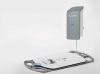
Fujifilm Unity SpeedSuite,
a single detector digital
radiography system


Ad Statistics
Times Displayed: 348574
Times Visited: 21068 MIT labs, experts in Multi-Vendor component level repair of: MRI Coils, RF amplifiers, Gradient Amplifiers Contrast Media Injectors. System repairs, sub-assembly repairs, component level repairs, refurbish/calibrate. info@mitlabsusa.com/+1 (305) 470-8013
Typically, DR is believed capable of yielding higher detective quantum efficiency than CR, thereby offering higher image quality. With the integrated detector system, it also removes the cassette processing step within workflow.
Ji says the true advantage of DR technology is within the workflow. "With DR you have the images three seconds later," she says. "Then there's the added benefit of the technician not having to leave the patient in the room to check images, which is good for safety reasons."
In the beginning, DR was hampered by its inability to handle cross-table or portable exams, but that is changing as portable and wireless DR systems are being introduced to the market.
DR systems have become more flexible. Canon introduced the first portable DR in 2001 and now detectors can be mounted on movable columns that can be positioned in three dimensions.
"With our portable technology, it's about patient comfort. It's the most similar you can find to CR and analog because you are still working with a flat piece of digital equipment not fixed into a system," says Ji. "You don't have to wait for processing time."
Yet most experts maintain that no DR system is flexible enough to handle all types of clinical applications. And although the cost of flat-panel-based digital X-ray systems has come down considerably with newer, lower-cost systems, DR still carries a higher price tag than CR.
"When you're dealing with a DR room, you're going to get a higher assessment for certain," Maier says. "You really want to purchase a DR room where you will get a return on that investment. It's fast and it's going to be ideal for those types of procedures where you can move patients in really quickly and take advantage of the speed. Initially, a dedicated chest room, where patients might have chest exams would be a place where a DR room makes a lot of sense."